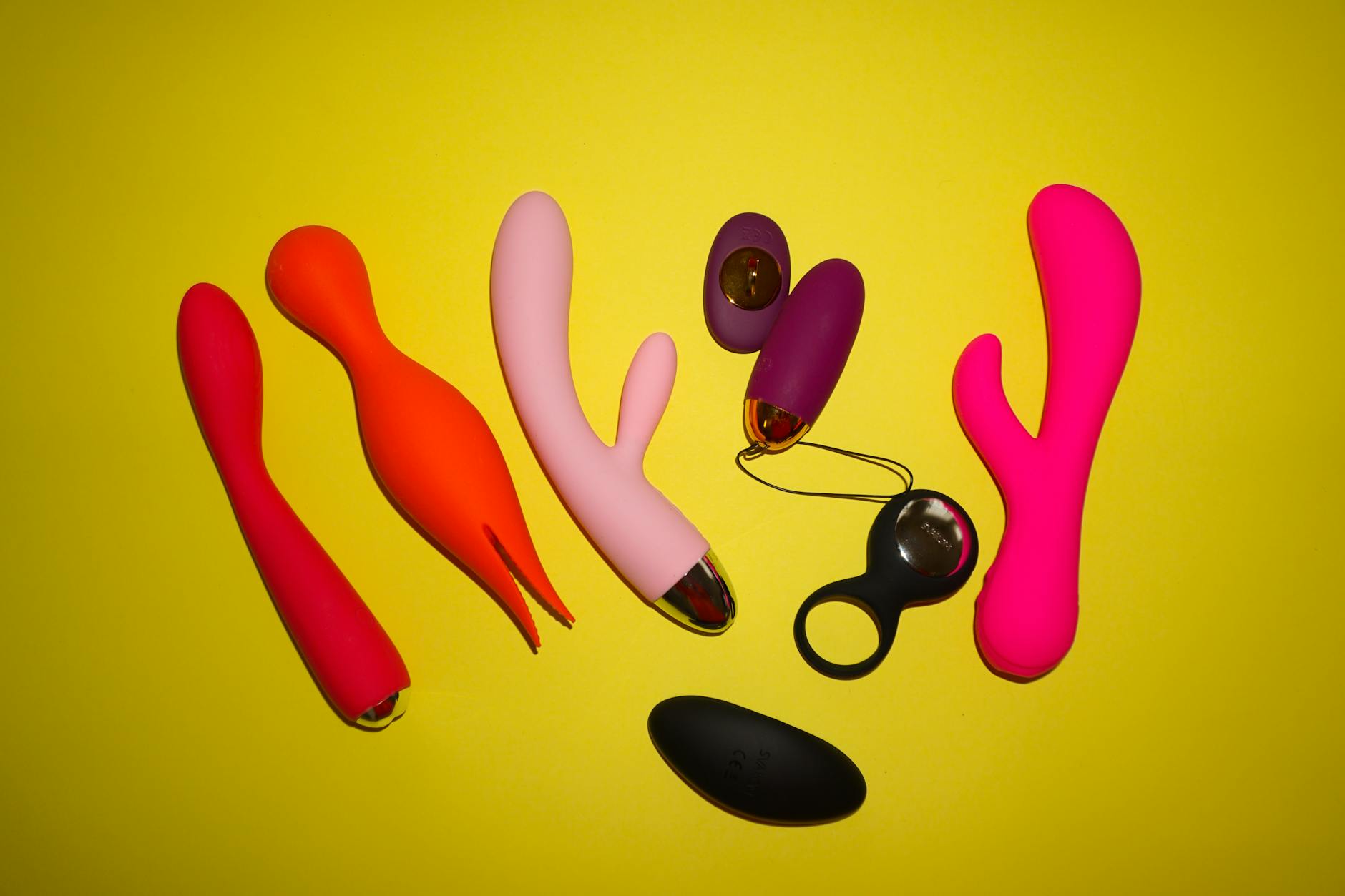
Here's the thing about new partner nerves
You're attracted. You're excited. And the moment things start heating up, your nervous system decides to throw a full panic response into the mix. Your mind gets loud, your body gets tight, and suddenly you're performing an anatomically impossible feat: trying to be present while also monitoring yourself from three feet away.
That's not a character flaw. That's what happens when nervous system activation hijacks arousal. And honestly? A lemon vibrator can be one of the most useful tools for breaking that cycle.
Not because it's magic. But because it gives your nervous system something clear to anchor to while your brain settles down.
Why nervousness kills sensation in the first place
When you're anxious around a new partner, your sympathetic nervous system (the fight-or-flight branch) is running the show. Meanwhile, your parasympathetic nervous system (the rest-and-digest branch) is offline. Here's the problem: pleasure lives in the parasympathetic state. Arousal requires your nervous system to believe you're safe.
So your body isn't broken. You're just neurologically in the wrong state.
The physical stuff happens anyway: your vulva might lubricate, sensation might wake up. But there's a disconnect between what's happening down there and what you're experiencing mentally. It's like the signal keeps getting interrupted. You feel scattered. You lose the thread of what's supposed to feel good.
How a lemon vibrator bridges that gap
A clitoral vibrator like the Lem works with your nervous system instead of against it. Here's why:
First, the sensation of vibration is grounding. It's a consistent, predictable stimulus that your brain can track. Instead of waiting around trying to work yourself up, you have immediate feedback. That feedback is calming because it's concrete. You don't have to wonder if something's happening. It's happening.
Second, the focus narrows. Instead of "Am I doing this right? Does my partner think I'm weird? What if I take too long? Do I look okay right now?" your entire attention collapses onto one thing: that vibration. Your mind stops multitasking between monitoring yourself and actually feeling pleasure.
Third, you hand over a small piece of control to the device. That sounds counterintuitive, but it's actually liberating. You're not performing arousal anymore. The vibrator is providing stimulation. Your only job is to receive it. That shift from active performance to passive reception is where your nervous system can finally exhale.
The setup that actually makes it easier
If you're new to using a lemon vibrator with a partner and you're already anxious, don't start during peak-pressure moments. Build it in during lower-stakes touch first.
Before clothes come off: tell your partner you want to use the Lem at some point. Not during sex necessarily. Just during foreplay, when there's less expectation. This removes the element of surprise and the "what if they judge me" spiral.
Start with your partner not inside you. If you're partnered with someone with a penis, make this clear. The vibrator works beautifully on its own or with external touch. The moment you add penetration to an already-anxious situation, you've added another variable to manage. Your nervous system doesn't need more variables right now.
Use it on your own first, in front of them. Seriously. Show them how you use it. How you hold it, what speed, where the angle feels good. This does three things: it normalizes the device, it removes the mystery (and the performance anxiety), and it gives your partner useful information. They get to see what actually gets you there instead of guessing.
The speeds and patterns that calm versus stress
When you're anxious, lower settings are your friend. This sounds obvious, but people almost always jump to medium or high intensity because they think "more sensation equals more arousal equals getting there faster."
Wrong direction.
When your nervous system is already activated, high-intensity stimulation reads as additional stress. You need the opposite: a gentle, consistent pattern that tells your nervous system "nothing dangerous is happening here."
Start on pattern one or two. Keep it there for longer than you think you need to. Your brain isn't just responding to sensation. It's also registering safety. That takes a few minutes at lower intensity.
If you're using the Lem (which cycles through patterns), stay in the same rhythm for at least three to five minutes before changing. Consistency is what your nervous system craves when it's already unsure.
The conversation that makes it actually work
Here's what most people skip, and here's where things fall apart: they don't talk about what they're nervous about.
So before the vibrator even enters the room, tell your partner what's happening. Not the deep psychological stuff necessarily. Just the surface truth: "I get in my head during new relationships. I overthink. I want to use the vibrator because it helps me actually feel instead of monitoring myself."
A good partner hears that as: "I want this experience with you to feel good for me." Not "I don't like your touch" or "Something's wrong with your technique."
Then agree on your role during it. Are they touching you elsewhere while you use the vibrator? Are they just present and watching? Are they holding you? Those aren't small details. They're the difference between feeling abandoned and feeling supported.
And here's the thing nobody says out loud: let your partner know it's okay if this takes a while. Or if it doesn't work the first time. Or if you need to stop. A new partner relationship has enough performance pressure already. Giving yourself permission to not arrive at the destination perfect and on schedule is how you actually get there.
Why you might feel more anxiety mid-experience
Sometimes using a vibrator with a new partner triggers more anxiety, not less. You're hyper-aware of how long it's taking. You're worried your partner is bored. You're thinking about whether this is "normal."
That's not failure. That's your nervous system checking in.
When that happens, pause. Don't push through. Say something like, "I need to slow down for a second." Then breathe. Three deep ones. In through the nose, out through the mouth. Your partner waits. No judgment.
The paradox is that the moment you stop trying to get somewhere, your nervous system often settles. Because now you're not performing for an imaginary deadline. You're just there.
When to reach out for more support
If nervousness around intimacy is a pattern across relationships, not just this new one, consider working with a therapist who specializes in sexuality and anxiety. That's not a sign something's broken. It's recognizing that your nervous system has learned to associate vulnerability with danger, and that's something worth addressing with professional support.
Your partner can be helpful and loving and still not be equipped to rewire your nervous system solo.
What changes as you get more comfortable
This anxiety usually doesn't last. As you get to know your partner and they respond with patience and genuine interest in your pleasure, your nervous system recalibrates. Trust builds. The mental chatter quiets.
Six weeks in, you might find you need the vibrator less because your nervous system isn't running the show anymore. Or you might find you love it for entirely different reasons. Either way, the early-stage anxious use case eventually becomes irrelevant because you've moved past it.
But right now? In those first encounters when everything feels high-stakes? A lemon clitoral vibrator isn't a crutch. It's a tool that tells your nervous system: "We're safe. You can relax. Something good is happening."
That matters more than you might think.